Hearing Aid Prices in India (2026): The Honest Guide
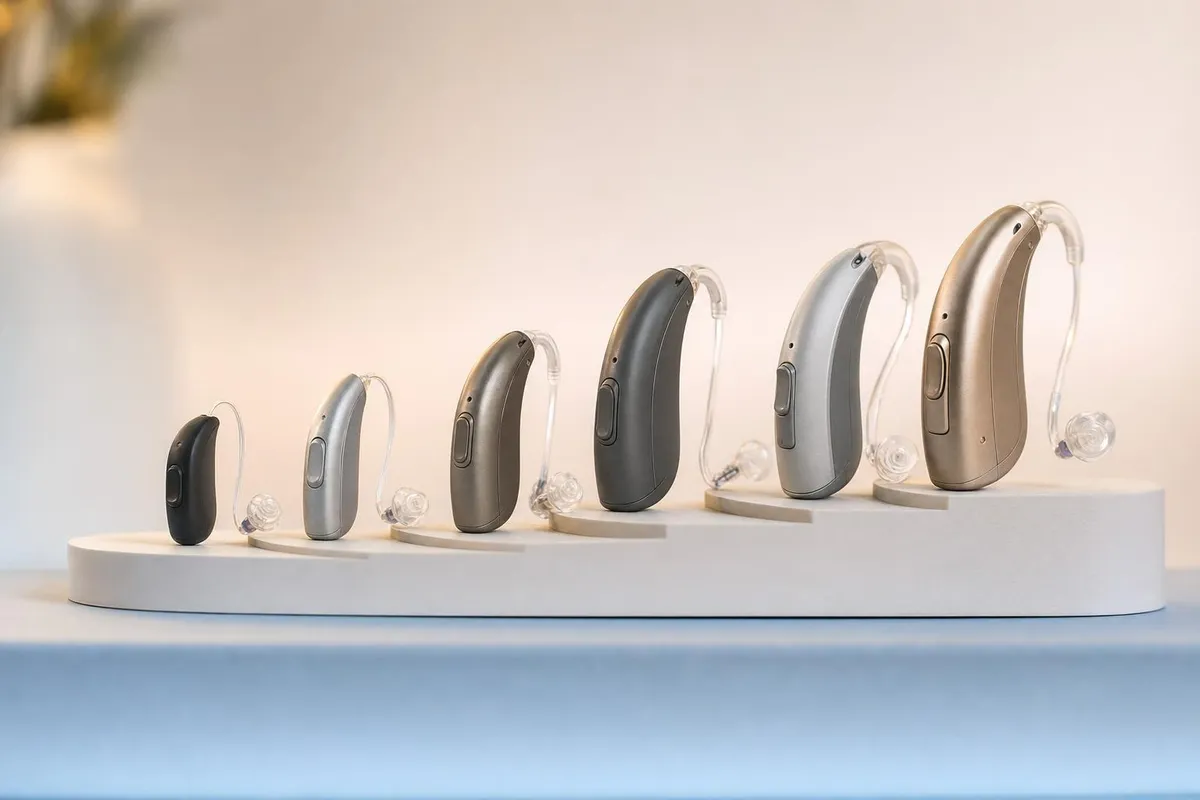
In 2026, hearing aids in India cost between roughly ₹15,000 and ₹4,00,000+ per ear, depending on technology tier, style and features. That’s an enormous range — this guide breaks down what sits in each band, what actually moves the price, what ownership costs beyond the sticker, and how to make sure you pay for what you need rather than what a brochure suggests.
The price bands, honestly
| Band (per ear) | What you get | Typical models we fit |
|---|---|---|
| ₹15,000–₹35,000 | Essential digital: reliable amplification, basic noise reduction, battery-powered | Signia Intuis/Prompt, Widex Enjoy, Oticon Ruby |
| ₹30,000–₹80,000 | Solid mid-range: better speech-in-noise, some with streaming/rechargeable options | Phonak Terra+, ReSound Key, Oticon Zircon, Widex Magnify |
| ₹70,000–₹1,50,000 | Premium entry: proven flagship platforms, Bluetooth streaming, rechargeable | Phonak Audéo Lumity, Oticon Real, ReSound OMNIA, Widex Moment |
| ₹1,00,000–₹2,50,000 | High premium: latest platforms, custom-molded options, strong AI noise handling | Signia Pure Charge&Go IX, ReSound Nexia, Starkey Genesis AI |
| ₹1,50,000–₹4,00,000+ | Flagship AI: real-time speech-from-noise separation, health tracking, Auracast | Phonak Audéo Sphere Infinio, Oticon Intent, ReSound Vivia, Starkey Omega AI, Widex Allure |
Browse the full list with per-model ranges in our product catalog.
What actually drives the price
- Technology tier — the big one. The same model is sold in 3–4 tiers; the case is identical, the chip’s features aren’t. Higher tiers handle restaurants, traffic and group conversations better. This is why one model shows a wide range like ₹70,000–₹2,80,000: same shell, different brain.
- Style. Custom-molded and invisible-in-canal devices cost more to make than standard receiver-in-canal (RIC) aids. See our styles guide.
- Rechargeability typically adds to the price but pays back in convenience and battery savings over the device’s life.
- Extras: Bluetooth/Auracast streaming, waterproofing (IP68), health and fall-detection sensors (Starkey), multi-speaker conversation tracking (Signia IX).
One ear or two?
If both ears have loss, two aids almost always beat one — the brain uses the difference between ears to locate sound and to pick voices out of noise, and an unaided ear left without stimulation for years becomes harder to help later (audiologists call it auditory deprivation). That said, an honest audiogram sometimes shows one ear genuinely doesn’t need help — which is exactly the kind of thing a free test settles before you spend anything.
Total cost of ownership — the part brochures skip
The device is most of the cost, but not all of it. Over a typical 5–7 year life, budget for:
- Consumables: wax guards and domes (a few hundred rupees a few times a year), disposable batteries if not rechargeable (roughly a battery every 4–10 days per aid depending on model and streaming).
- Servicing: at Let’s Hear, cleaning and re-tuning visits are part of the relationship, not a billable surprise — ask any seller what their policy is before buying.
- Re-programming: your hearing can shift over the years; the same device gets re-tuned to your new audiogram at no device cost.
A fair quote should also state clearly what’s included: programming to your audiogram, fitting, and follow-up tuning. At Let’s Hear every fitting includes a free hearing test, a 7-day trial, 0% EMI options, and up to ₹25,000 off your first purchase during offer periods. If a seller quotes a bare device price with no fitting or aftercare, that discount is an illusion — an unfitted hearing aid is just an expensive amplifier.
About 0% EMI — the honest version
0% EMI spreads a real price over months; it doesn’t lower it. It’s genuinely useful when it turns “impossible this year” into “manageable this month” — and it’s how many of our patients afford a tier better suited to their loss. Just compare the total payable against the cash price, and be wary of any seller whose EMI quote quietly totals more.
How to not overpay — a checklist
- Test first, shop second. Your audiogram might show one ear needs less technology than you think — or that wax removal solves half the problem.
- Match the tier to your life, not the brochure: a quiet retiree and a site engineer need different tiers of the same model.
- Use the trial. Seven days in your kitchen, office and street tells you more than any showroom demo.
- Ask what’s included — fitting, follow-ups, servicing, warranty length — and get it in writing.
- Compare per-ear, like-for-like tiers across brands; a “cheaper” quote at a lower tier isn’t cheaper, it’s less.
Ready for real numbers for your specific hearing? Book a free test at any of our 8 clinics and we’ll quote tiers honestly against your audiogram — or start with the 5-minute online check from home.