Hearing Aid Care in the Monsoon: What Moisture Actually Does
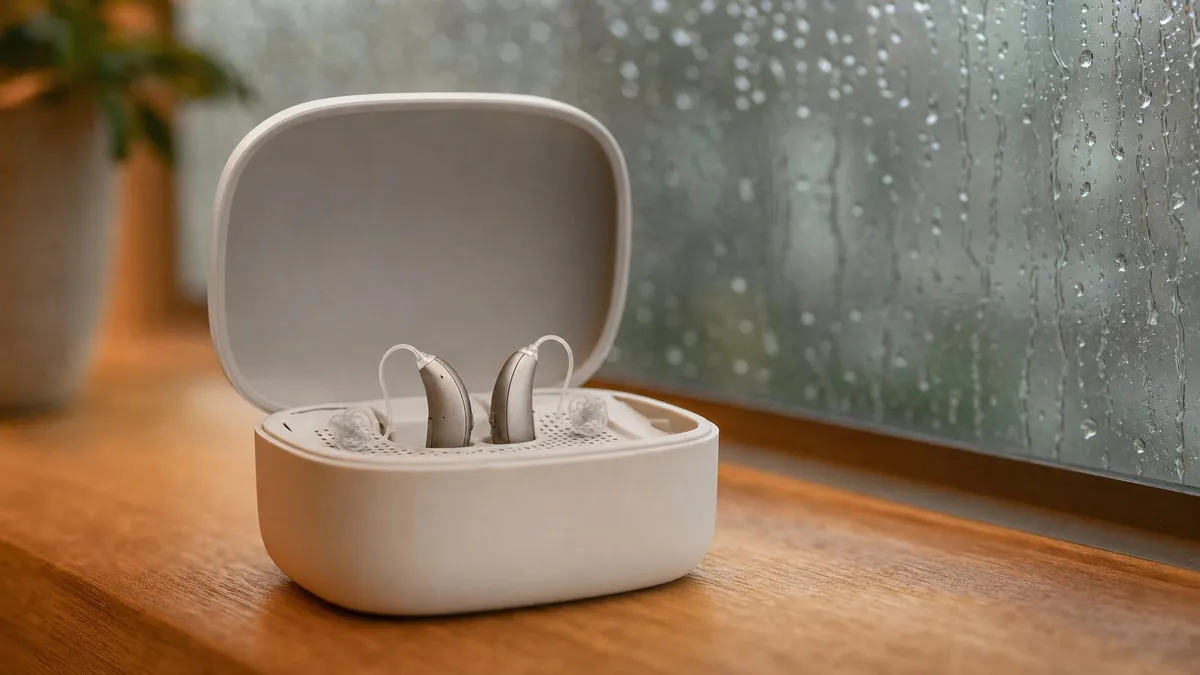
Every season tests a hearing aid, but the South Indian monsoon is the one that breaks them. Between June and September the air itself becomes the enemy: relative humidity sits high for weeks, rain is unpredictable, and the daily move between muggy streets and air-conditioned rooms wrings condensation out of the air and into your electronics. This is a deep look at why moisture is so destructive — and exactly how to get your devices through the wet months intact. For the year-round basics, pair this with our complete hearing-aid care guide.
Why moisture is the number-one killer
A hearing aid is a sealed-ish computer worn for twelve-plus hours a day inside a warm, humid ear. Moisture does not just wet it — it works in three quiet, cumulative ways:
- Corrosion. Humidity oxidises the metal contacts, the battery terminals and the fine solder joints on the circuit board. Corroded contacts mean weak, intermittent or dead sound.
- Component failure. The receiver (the tiny speaker) and the microphones have delicate membranes. Moisture films and mineral residue from sweat block and degrade them — the commonest cause of a device sounding muffled or cutting out.
- Condensation inside the shell. When you step from a 32°C street into a 22°C AC room, water vapour condenses inside the casing, exactly where you cannot wipe it away.
The scale is not trivial: industry estimates attribute the large majority of hearing-aid repairs to moisture. In a humid climate, drying is not optional maintenance — it is the main thing standing between your device and the service bench.
What an “IP68” rating actually promises
Modern hearing aids advertise an IP rating — IP68 is common — and it is a genuine benefit, but it is widely misread. The rating comes from the international standard IEC 60529, and the two digits mean:
- First digit (6): dust-tight.
- Second digit (8): protected against continuous immersion under conditions set by the maker (often ~1 metre for ~30 minutes, in a lab test).
Here is the catch every audiologist wants you to understand: IP68 is a one-off, controlled test, not a promise about months of real life. Sweat, ear-canal moisture and monsoon humidity enter gradually through normal wear regardless of the IP rating. The rating means your aid will likely survive being caught in a shower or a splash — it does not mean you can skip nightly drying. Think of it as a seatbelt, not a reason to drive into a wall.
Where the water comes from in the monsoon
| Source | Why the monsoon makes it worse |
|---|---|
| Rain | Sudden downpours, open two-wheeler commutes, walking to the auto |
| Humidity | Weeks of high relative humidity, especially on the coast (Mangalore, coastal Kerala) |
| Sweat | Muggy, still air means more perspiration around and in the ear |
| Condensation | Repeated AC-to-outdoor temperature swings drive water inside the shell |
| Ear-canal moisture | A naturally warm, damp space — amplified when everything else is damp too |
Your monsoon drying routine
The single habit that matters most is drying every single night. Build the rest around it:
1. Wipe first. Before storing, wipe the device with a soft, dry cloth — never a wet wipe, alcohol or running water. Clear any visible wax from domes and wax guards.
2. Open the battery door (battery models). This lets trapped moisture escape and doubles as your “off” switch. Rechargeable models can’t be opened, which makes an active dryer more important — see below.
3. Dry overnight. Two good options, in order of effectiveness:
| Method | How it works | Notes |
|---|---|---|
| Desiccant drying jar | Moisture-absorbing beads pull water out passively over 6–8 hours | Cheap and effective; recharge or replace the desiccant regularly — a saturated pack does nothing. Molecular-sieve desiccant absorbs more than plain silica gel. |
| Electronic dehumidifier | Gentle warmth + drying air, some with a UV/sanitising cycle | Best choice for a humid climate and for rechargeable aids; runs a controlled cycle every night. |
4. Store dry, store cool. Once dried, keep the aids in their dry container, away from bathrooms, window sills and anywhere damp.
What not to do (the monsoon myths)
- Rice does not work. It dries electronics poorly, and rice dust and starch can lodge in the microphone ports and cause the very fault you were trying to fix. Use proper desiccant.
- No heat. Hairdryers, ovens, microwaves and direct sun apply heat that can warp the casing and damage the receiver and microphones. Drying should remove moisture without cooking the device.
- Don’t ignore early symptoms. Intermittent, weak or distorted sound after a wet day is moisture talking. A full overnight dry often fixes it; repeated episodes need a professional look before corrosion sets in.
Style-specific notes
- BTE and RIC (behind-the-ear / receiver-in-canal): the thin tubes and domes trap water. Detach and dry the tubing where the design allows, and change wax guards more often in the wet months. (New to these styles? See our guide to RIC, BTE and CIC.)
- Custom in-the-ear aids sit deepest in the moist canal — nightly drying and clean wax guards matter most here.
- Rechargeable aids can’t be opened to vent, so an electronic dryer is the strongest safeguard.
When to bring them in
If sound doesn’t return after a fresh charge/battery, a new wax guard and a full overnight dry, don’t keep pushing a damp device — that’s how a recoverable problem becomes a permanent one. Our clinics can vacuum-dry and deep-clean aids professionally and catch early corrosion. Patients on the humid coast — Mangalore and Kerala especially — do well to schedule a mid-monsoon service check.
Bring your hearing aids to any Let’s Hear clinic for a monsoon clean-and-dry, ask us which drying kit suits your device, or call +91 70222 36768. If you’re still choosing a device and want one built for a humid climate, book a free hearing test and we’ll factor moisture resistance into the recommendation.
Sources
- Moisture as the leading cause of hearing-aid repair — industry estimates attribute the large majority of repairs to moisture ingress (manufacturer and audiology-industry guidance).
- IEC 60529 Ingress Protection (IP) code — meaning of IP6X (dust-tight) and IPX8 (continuous immersion under maker-specified conditions); IP rating is a controlled test, not immunity to gradual moisture.
- Drying methods — desiccant dryers act passively over 6–8 hours; molecular- sieve desiccant absorbs more moisture than silica gel; electronic dehumidifiers provide gentle heat and drying, some with a sanitising cycle.