Hearing Aid Care & Maintenance
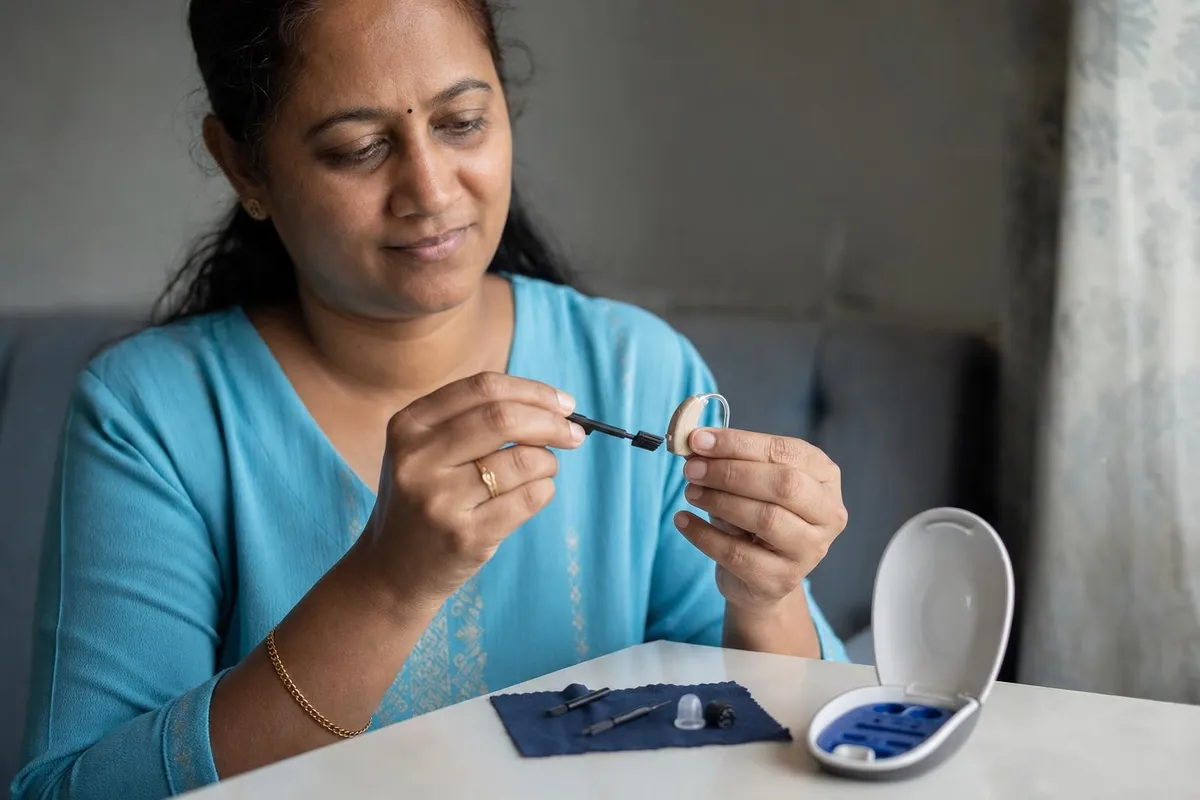
Hearing aids live in a warm, humid, waxy environment for 12+ hours a day — a hard life for precision electronics. A few minutes of routine care keeps them clean, dry and reliable for years, and most of it costs nothing. Here’s the full routine, adapted to Indian conditions and to your device’s style.
Daily habits (2 minutes)
- Wipe them down each night with a soft, dry cloth — never wet wipes or alcohol, which damage the casing and receivers.
- Check the sound outlet for wax. Wax is the #1 cause of “my hearing aid is dead” — usually it’s just blocked, and the brush or wax pick from your care kit clears it.
- Open the battery door overnight (battery models) so moisture can escape, or place rechargeables in their charger — the case protects them too.
- Keep them away from heat: not on a windowsill, dashboard, or near a stove.
Care by style
Different styles collect dirt in different places:
RIC (receiver-in-canal) — the wax guard on the in-canal speaker is the critical part. Change it when sound weakens or you can see build-up; change the soft dome when it discolours or stiffens. Both are 30-second jobs your audiologist will demonstrate at fitting.
BTE (behind-the-ear) — the earmold and tubing do the collecting. Wipe the mold daily; watch the tubing for cracks, stiffness, or condensation droplets (a flick usually clears a droplet). Tubing is replaced cheaply at any branch when it ages.
Custom in-ear (ITE/ITC/CIC) and invisibles — the whole device sits in the wax zone, so the outlet and vent need the brush daily, not weekly. These styles benefit most from the 4–6-month professional deep clean.
The monsoon section (June–September matters here)
South Indian humidity is the hardest season your hearing aids will face. For the full monsoon playbook — how moisture actually kills devices, what an IP rating really promises, and drying methods compared — see hearing aid care in the monsoon.
During monsoon months:
- Use a drying capsule jar or an electronic dehumidifier every night — a few hundred rupees of drying capsules genuinely extends device life.
- Wipe sweat off after commutes; sweat is salty water, worse than rain.
- If a device gets properly wet: switch off, remove the battery (or take it off the charger), dry the outside, and leave it in the drying jar overnight. Never use a hair dryer, oven, or direct sunlight.
- Persistent crackle after a soaking → bring it in; corrosion caught early is repairable.
Battery vs rechargeable care
Disposable zinc-air batteries: let a fresh battery sit for a full minute after peeling the sticker — it activates with air and lasts noticeably longer. Store spares at room temperature (not the fridge), and keep them away from children and pets — swallowed button cells are a medical emergency.
Rechargeables: charge every night in the case; a full charge runs the day (premium models like the Signia Pure Charge&Go IX run up to 36 hours, the Starkey Genesis AI up to 51). Use the supplied charger, keep its contacts clean and dry, and take the charger — not just a cable — when you travel.
Troubleshooting: check these before worrying
| Symptom | Most likely cause | Fix |
|---|---|---|
| No sound / “dead” | Blocked wax guard or dome | Replace guard/dome; brush outlet |
| Weak or muffled sound | Wax build-up, moisture, tired battery | Clean, dry overnight, fresh battery/full charge |
| Whistling (feedback) | Poor fit, wax in ear canal, cracked tubing | Re-seat the aid; if it persists, book a check — your ear or the fit may have changed |
| Crackling / cutting out | Moisture, dirty battery contacts | Dry overnight, clean contacts gently; persistent → service |
| Sounds distorted at high volume | Ageing receiver | Service visit |
| Battery drains fast | Moisture, streaming heavily, ageing cell | Dry overnight; review streaming use; batteries have lifespans too |
If the basics don’t fix it, stop experimenting and bring it in — home surgery with pins and needles ends more hearing aids than humidity does.
When to bring them in
Come see us if you notice weaker sound despite fresh batteries and clean wax guards, whistling that wasn’t there before, intermittent cut-outs, or any crackle after the device got wet. Every Let’s Hear clinic deep-cleans, re-tubes and re-tunes hearing aids — including aids you bought elsewhere — and a service check every 4–6 months keeps small problems from becoming replacements. Re-testing your hearing every year or two matters too: if your hearing has shifted, the programming needs updating even when the device is perfect.
Cared-for hearing aids don’t just last longer — they sound better every single day. If yours feel weaker than the day you were fitted, book a free check before assuming you need new ones.